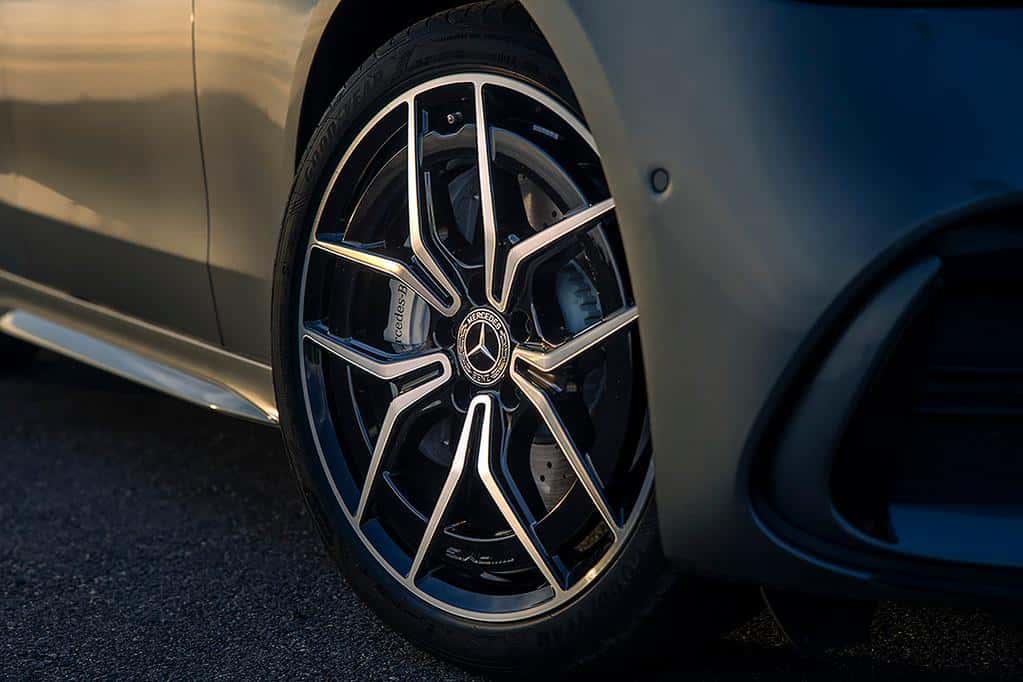
A new set of wheels changes how your Mercedes-Benz looks. It also touches your brakes, suspension, tire pressure monitoring and warranty. Here is what has to match, what the warranty rules actually say and how to keep your wheels looking right.
Genuine Mercedes-Benz wheels, including Mercedes-AMG designs, are the simplest choice, because they are engineered specifically for your vehicle. An aftermarket wheel that meets your model’s approved specifications is also an option. The right answer depends on your model, your budget and how much fitment checking you want to do.
Mercedes-Benz is clear about its own position. For safety reasons, the Owner’s Manual says to use only tires, wheels and accessories specially approved by Mercedes-Benz for your vehicle. It also advises asking a qualified workshop about suitability, legal provisions and factory recommendations before you buy a part that is not approved.
| Consideration | Genuine Mercedes-Benz or Mercedes-AMG | Aftermarket |
|---|---|---|
| Fitment | Engineered specifically for your vehicle, according to Mercedes-Benz | Size, bolt pattern, center bore, offset and load rating must match your model’s approved specifications |
| Quality standard | Meets the same quality control standards as the original equipment and applicable Federal and State safety regulations | Varies by manufacturer. Ask a qualified workshop about suitability before you buy |
| TPMS | Every installed wheel needs a working sensor | Every installed wheel needs a working sensor. Mercedes-Benz notes alternate wheels can keep the TPMS from working properly |
| Wheel bolts | Use bolts approved for Mercedes-Benz and for that wheel | Use bolts approved for Mercedes-Benz and for that wheel |
| Warranty on the wheel | Genuine parts carry a Mercedes-Benz limited warranty. Ask our parts team for the current terms on wheels | Any warranty comes from the wheel’s maker or seller. Mercedes-Benz does not warrant non-Mercedes-Benz parts |
| Your vehicle warranty | Stays in effect | Stays in effect. Coverage can be denied only for damage the part or its installation caused |
Summary of the Mercedes-Benz Owner’s Manual, the MY26 Warranty and Service Booklet and FTC guidance. Neither column is a recommendation for or against any brand.
For a broader look at the tradeoffs across every kind of part, read our guide to OEM vs. aftermarket parts. If you are still deciding on a look, our article on Mercedes-Benz accessories covers other ways to personalize your car.
Bolt pattern, center bore, offset (ET), width, diameter and load rating must all match your model’s approved specifications. Mercedes-Benz says to always replace wheels and tires with ones that meet the original part’s specifications. Wrong sizes can damage the brakes or suspension, and tires can rub against the body and axle components when the car is loaded.
These numbers change from model to model, and sometimes from trim to trim. That is why we do not publish a single bolt pattern or offset for every Mercedes-Benz. Our parts team can check fitment for your car using its VIN.
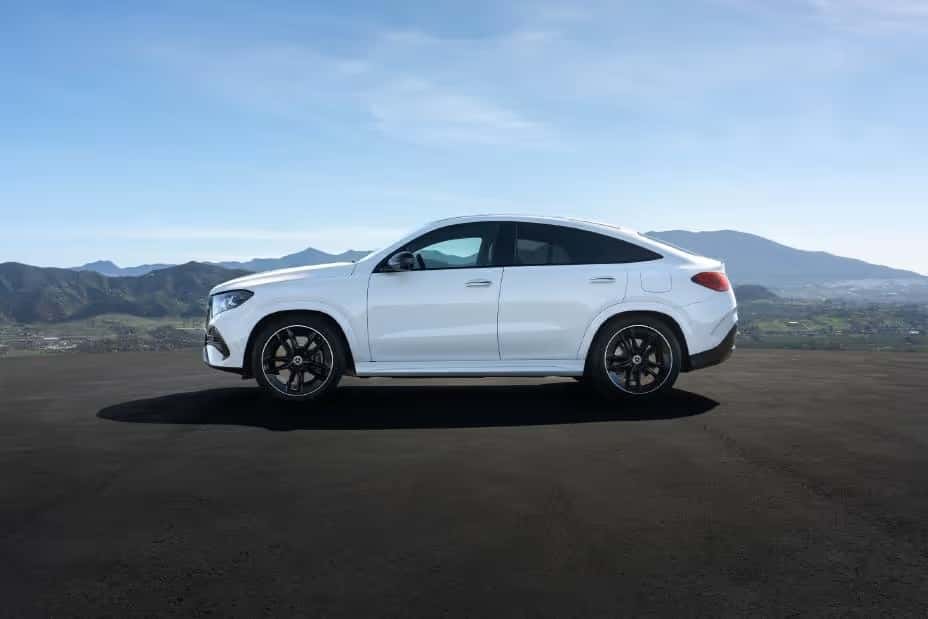
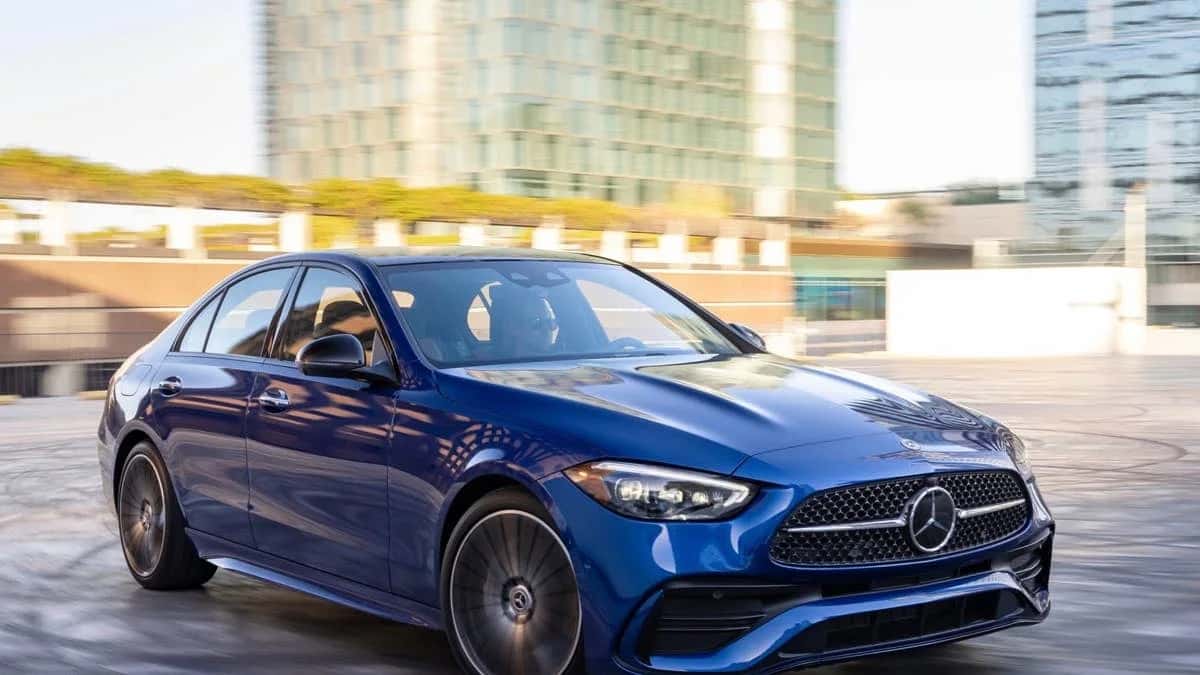
Thinking about going up a size? Ask first. Mercedes-Benz notes that larger wheels have a smaller tire section width, which raises the risk of wheel and tire damage over obstacles. Compare models on our new Mercedes-AMG, GLC and E-Class pages.
No, installing aftermarket wheels does not void your warranty by itself. Under FTC guidance, your warranty stays in effect if you use aftermarket or recycled parts. The manufacturer or dealer can deny coverage for a damaged part only if they show the aftermarket part, or its improper installation, caused the damage.
FTC: The Magnuson-Moss Warranty Act generally bars warrantors from making coverage depend on using a specific brand of part. The exceptions are when that part is provided free under the warranty or the FTC grants a waiver. Mercedes-Benz USA: Mercedes-Benz does not warrant non-Mercedes-Benz parts, and their use may affect warranty coverage for certain repairs relating to those parts. Its booklet also excludes malfunctions caused by the use of other than Genuine Mercedes-Benz parts and accessories. The key words are “caused by”: coverage turns on what caused the failure.
In plain terms, the two positions fit together. Your car stays covered. A repair that traces back to a non-approved wheel, bolt or sensor may not be. Mercedes-Benz USA recommends Genuine Mercedes-Benz parts, while noting that warranty obligations do not depend on using a particular brand. For more detail, see are Mercedes-Benz parts covered under warranty.
Your tire size, load index and speed rating are printed on the tire sidewall. On most models, the Tire and Loading Information placard is on the driver’s door jamb (B-pillar). The placard lists seating, maximum load and recommended cold tire pressures. Your Owner’s Manual has the tire pressure table and approved sizes.
| What you need | Where to find it | Worth knowing |
|---|---|---|
| Tire size, load index and speed rating | The tire sidewall | The number after the “R” is the wheel diameter. For example, R19 means a 19-inch wheel |
| Recommended cold tire pressures | Tire and Loading Information placard, driver’s door jamb on most models | Also lists seating and maximum load |
| Approved wheel and tire sizes | Your Owner’s Manual | Sizes can differ by model, trim and axle |
| Tire marking such as MO or MOE | The tire sidewall | Shows a tire configured for Mercedes-Benz |
Placard location verified in the GLC Owner’s Manual. Check your own manual for your model.
Need a genuine wheel, wheel bolts or TPMS sensors? Our parts team can check fitment by VIN.
Only when every installed wheel has a working sensor, and Mercedes-Benz says to restart the system after any wheel change. Even then, replacement or alternate wheels can keep the TPMS from working properly. On vehicles with TPMS, Mercedes-Benz requires functioning sensors in all installed wheels.
If the TPMS is not working properly, the malfunction indicator flashes for about one minute, then stays lit. Mercedes-Benz says to restart the tire pressure monitoring system whenever wheels or tires have been changed or newly installed. It also notes that tire-installing tools placed near the valve can damage the sensor electronics, so have tires changed at a qualified workshop. Ask our service team about tire mounting and a TPMS check at 949-347-3860.
Look for tires marked MO, MOE or MO1 (certain Mercedes-AMG tires), because Mercedes-Benz configures these tires for ABS, ESP® and 4MATIC. MO stands for Mercedes-Benz Original, and MOE (Mercedes-Benz Original Extended) has run-flat characteristics for certain wheels. Our Mercedes-Benz tire guide explains tire labeling in more depth, and why tire rotation is important covers rotation intervals and staggered fitments.
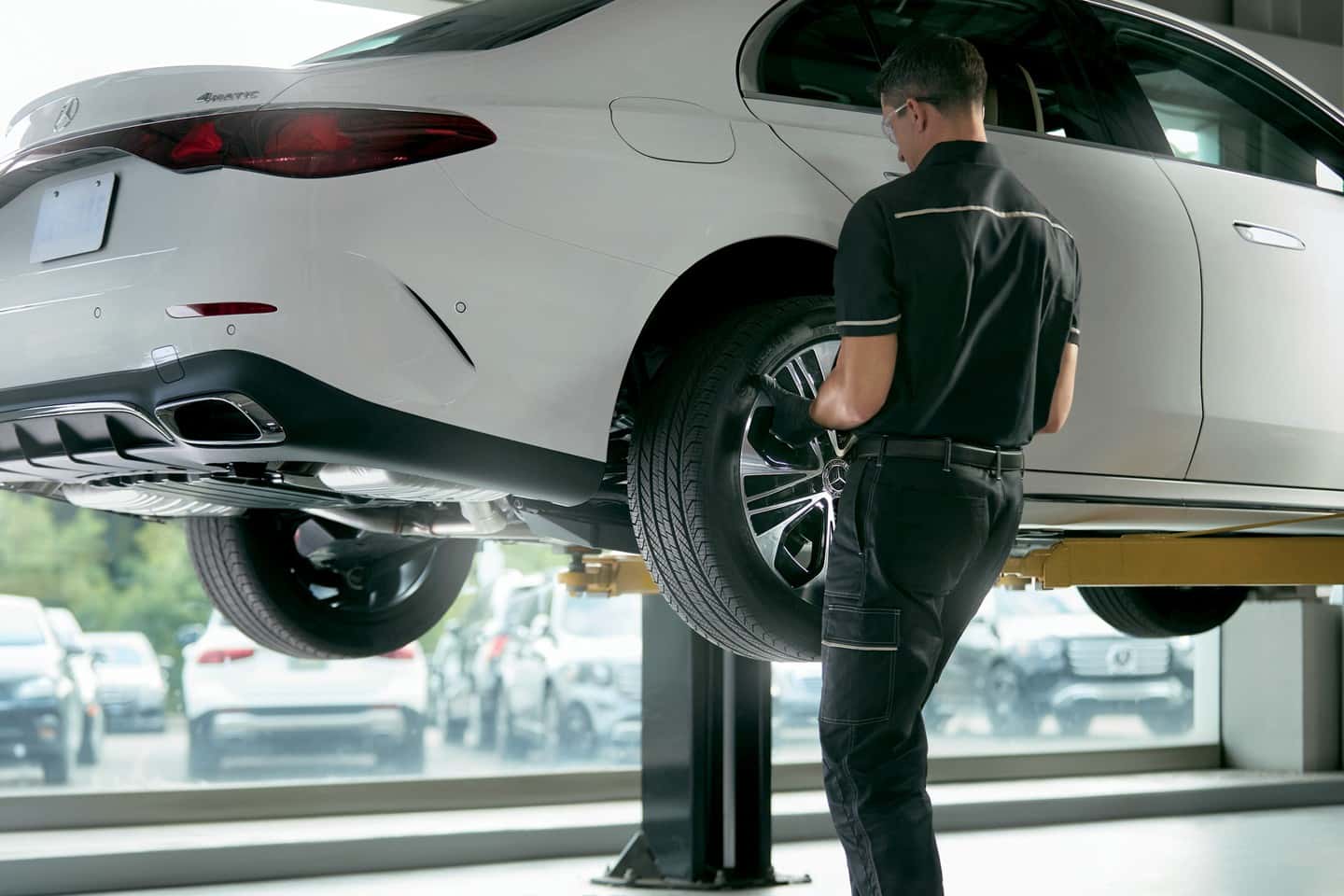
No. Damage to tires or rims from pothole or curb impact or other road hazards is not covered by the New Vehicle Limited Warranty. That exclusion comes from the Mercedes-Benz Warranty and Service Booklet. Ask about wheel and tire protection when you buy or lease to see what it covers.
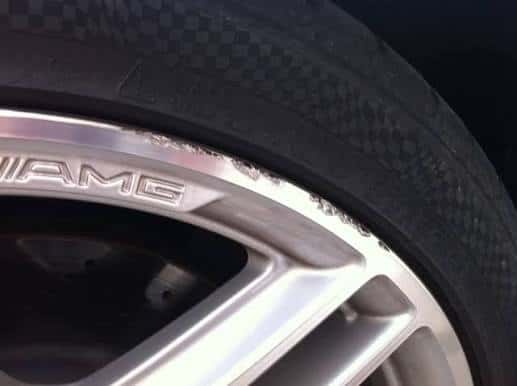
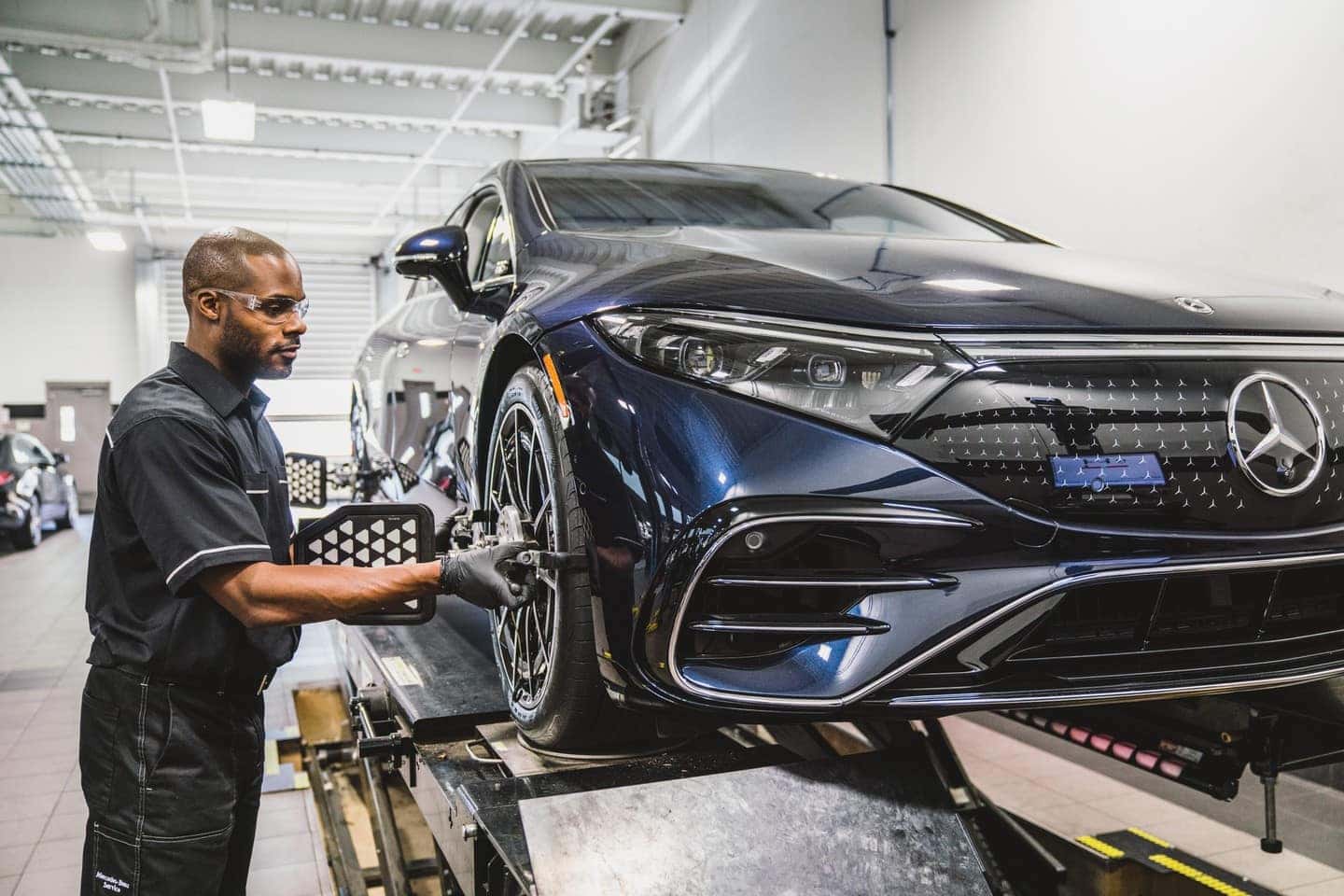
Cosmetic curb rash can often be refinished. A wheel that is bent or cracked, or causes vibration or air loss, should be inspected and may need replacement. Our service team can inspect it and explain your options. Mercedes-Benz also advises checking tire pressure and looking over wheels and tires for damage at least once a month and before long trips.
Driving habits help too. Slow down for curbs, speed bumps, manhole covers and potholes, and avoid parking on curbs. After driving in run-flat (emergency) mode on MOE tires, have the rims checked by a qualified workshop, and replace the tire. If a hit leaves the steering off center, book an inspection and ask about the alignment special, or call 949-347-3860.
Clean your wheels with water and an acid-free alloy wheel cleaner, and never use acidic cleaners to remove brake dust. Mercedes-Benz warns that acidic products can damage wheel bolts and brake components. After washing, drive for a few minutes so the brakes warm up and dry, which helps prevent corrosion on the discs and pads.
Local driving adds its own wear. Coastal miles on Pacific Coast Highway through Dana Point, weekend runs on canyon roads and tight parking-lot curbs across South Orange County all put wheels to work. Regular, gentle cleaning keeps brake dust from building up.
Driving in from Aliso Viejo, Dana Point or San Juan Capistrano? Contact our Laguna Niguel parts center about genuine wheels, wheel bolts and TPMS sensors. Check current parts specials before you order. If you are shopping for a Certified Pre-Owned Mercedes-Benz, look closely at its wheels during your test drive.
Want more ownership tips? Browse all of our service and parts tips.
Straight answers to the wheel questions owners ask most. For wheel purchases, call our parts department at 949-347-3700.
Have a question about your vehicle? Call our service team at 949-347-3860.
Genuine wheels are the simplest choice because Mercedes-Benz engineers them specifically for your vehicle and they meet the same quality control standards as original equipment. Aftermarket wheels can work if every specification matches your model. For safety reasons, Mercedes-Benz recommends only wheels it has approved for your vehicle, and suggests asking a qualified workshop before buying anything else.
No, not by themselves. Under FTC guidance, your warranty stays in effect when you use aftermarket parts. Coverage can be denied only for damage the aftermarket part or its installation caused. Mercedes-Benz does not warrant non-Mercedes-Benz parts, and their use may affect coverage for related repairs.
It depends on the model, so check with our parts team rather than relying on a single number. Bolt pattern, center bore, offset, width and load rating must all match your model’s approved specifications. Our parts team can check fitment using your VIN before you order.
Most Mercedes-Benz passenger models use wheel bolts. Use only bolts approved for Mercedes-Benz and for that specific wheel, and never oil or grease the threads. Bolts are tightened evenly in a diagonal pattern, then torqued to your model’s specification with the vehicle on the ground.
Look at the tire sidewall, which shows the tire size, load index and speed rating. The number after the R is the wheel diameter, such as R19 for 19 inches. On most models, the Tire and Loading Information placard on the driver’s door jamb lists recommended cold tire pressures.
Cosmetic curb rash can often be refinished. A wheel that is bent or cracked, or that causes vibration or air loss, should be inspected and may need replacement. Keep in mind that curb and pothole damage to tires or rims is not covered by the New Vehicle Limited Warranty.
Only when every installed wheel has a working sensor, and Mercedes-Benz says to restart the system after any wheel change. Even then, replacement or alternate wheels can keep the TPMS from working properly. If the warning light flashes for about a minute and then stays on, have the system checked.
Use water and an acid-free alloy wheel cleaner. Acidic wheel cleaners can damage wheel bolts and brake components, so Mercedes-Benz advises against them. After washing, drive for a few minutes so the brakes warm up and dry, which helps prevent corrosion on the discs and pads.
Only sizes approved for your model. Wrong sizes can damage brakes or suspension components and let tires rub against the body when loaded. Mercedes-Benz also notes that larger wheels have a smaller tire section width, which raises the risk of wheel and tire damage over curbs and potholes.
Our parts team can check genuine wheel fitment by VIN, and our service team can help with TPMS checks and alignment.
Service: 949-347-3860
Information reflects the Mercedes-Benz GLC and G-Class Owner’s Manuals, the MY26 Warranty and Service Booklet and FTC guidance reviewed 09/24/2026. Approved wheel and tire fitment varies by model, trim and model year.


